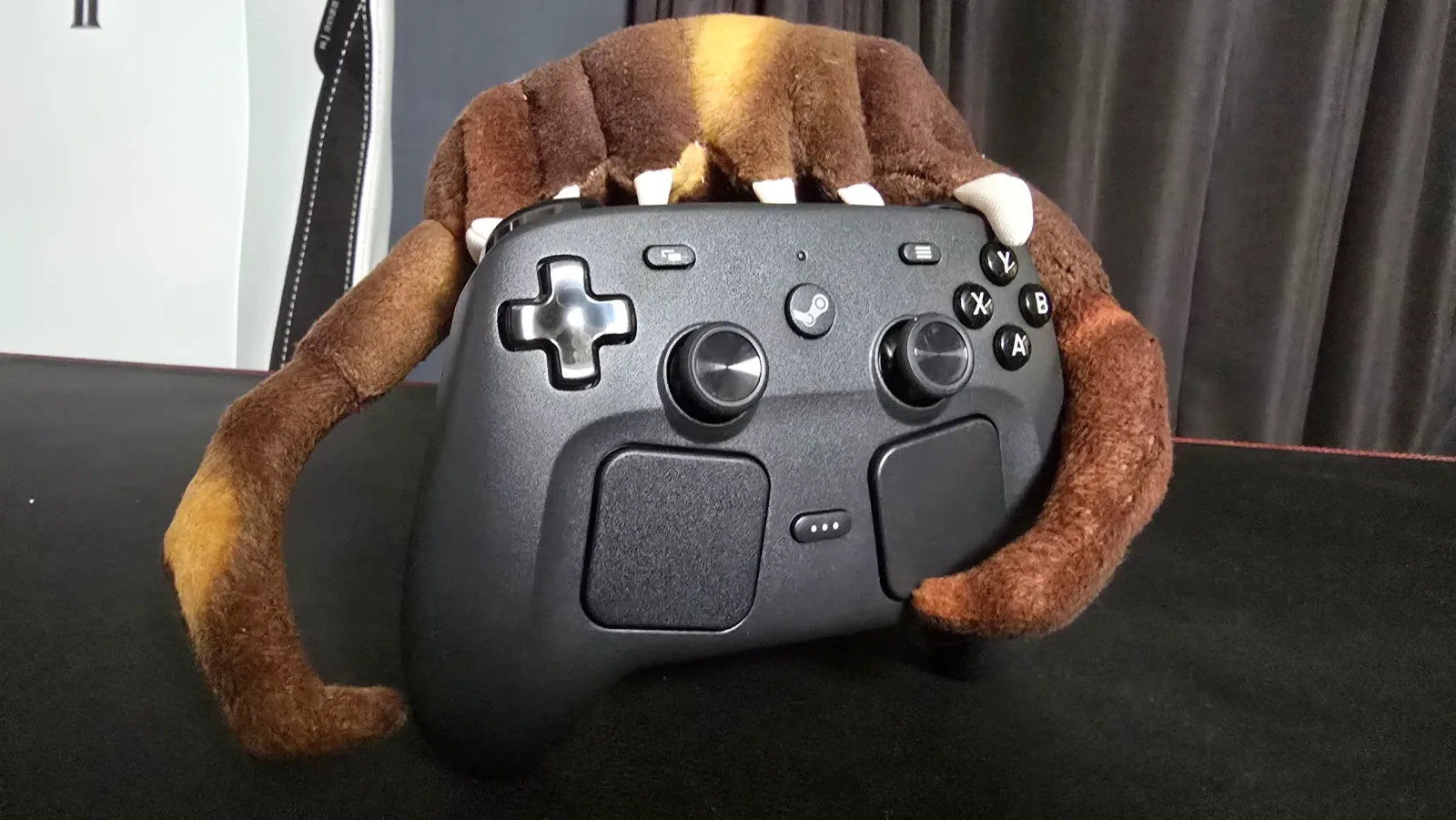
After three decades of PC gaming, I've held more controllers than I care to count. The Sega Saturn pad. The DualSense. The Xbox Elite. When Valve announced a redesigned Steam Controller for 2026—over a decade after the original—I was skeptical. Could a company whose soul lives in software really deliver a gamepad that stands shoulder-to-shoulder with the greats? After weeks of testing, I'm surprised to say: this is the most comfortable PC gamepad I've used since Sega left the hardware game. Here's why it's become my daily driver for couch gaming.
A Controller Built for Couch Gaming
Let's be clear: this isn't a competitive esports weapon. Valve designed the Steam Controller (2026) for the "comfy" or "lazy" PC gamer—the one who plays from a couch or bed, not hunched over a desk. And in that mission, it excels. The symmetrical thumbstick layout, reminiscent of the DualSense but with angled touchpads beneath, feels natural in the hand. I gave ergonomics a 4 out of 5; the grips are contoured, the weight is balanced, and after hours of Baldur's Gate 3 from my sofa, my wrists thanked me.
Connectivity is a standout feature. The Steam Controller Puck—a magnetic charging dongle that doubles as a low-latency receiver—is a stroke of genius. Just drop the controller onto the Puck, and it charges magnetically. No fumbling with cables. You also get USB-C and Bluetooth 5.0, but the Puck is where the magic lives. Battery life is absurdly good: 35+ hours from an 8.39 Wh Li-ion pack. I gave it a 6 out of 5 for battery—yes, it broke the scale. In a market where many controllers struggle to hit 20 hours, this is a triumph.
This controller is clearly built for the Steam ecosystem. If you own a Steam Deck, Steam Link, or are eyeing the upcoming Steam Machine, it's a no-brainer. But if you're outside that walled garden, you may find the gate locked.
Precision Inputs That Rival a Mouse
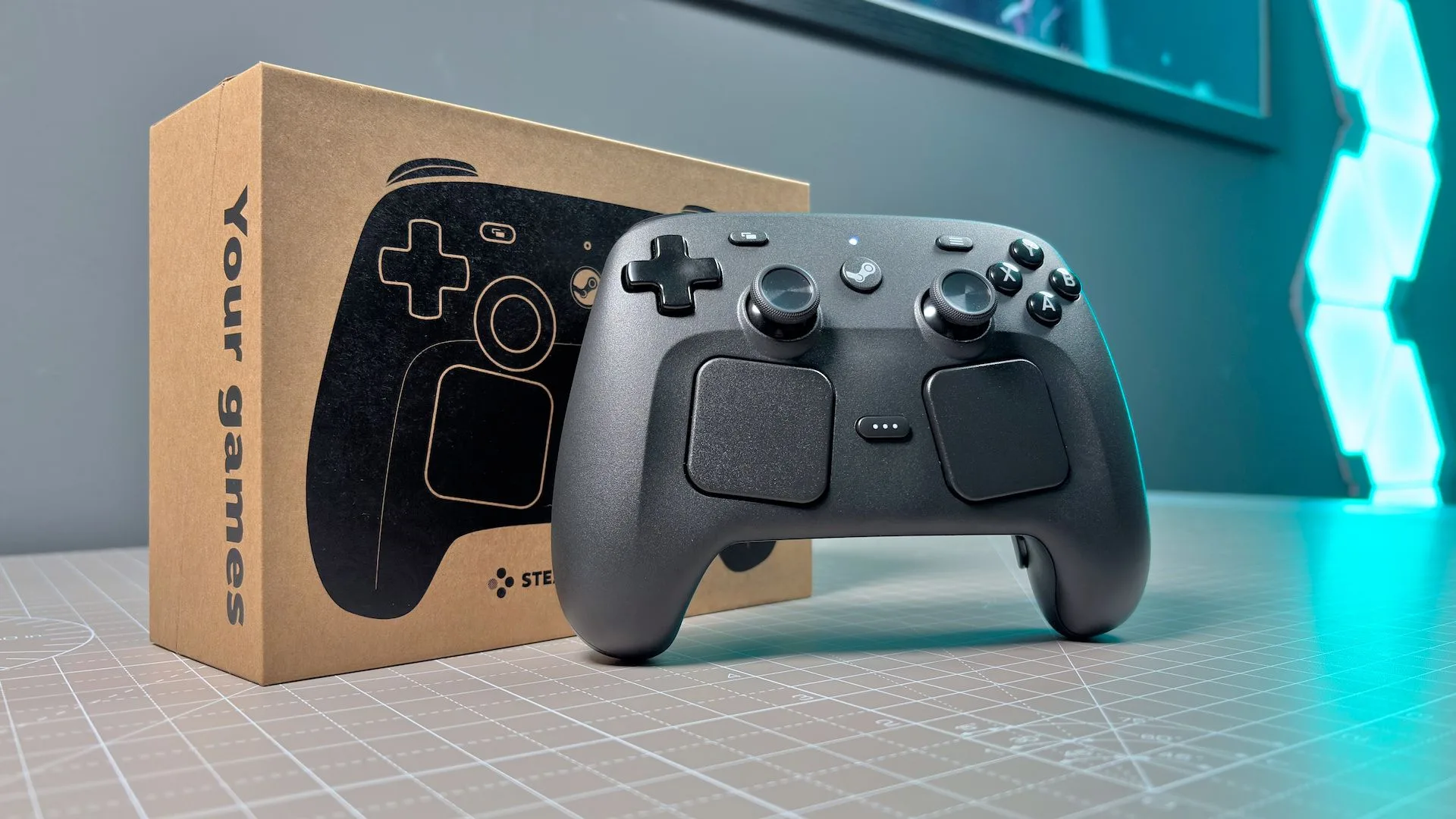
The thumbsticks are the star of the show. Using Tunneling Magneto-Resistance (TMR) technology with capacitive touch, they glide smoothly, offer tactile resistance, and—crucially—show zero signs of stick drift. After weeks of testing, they feel as fresh as day one. The trackpads, meanwhile, are "70% of the way" to a mouse, according to my testing. They're ideal for desktop navigation, strategy games like Civilization VII, or any title where precision cursor control is key.
The 6-axis gyroscope adds another layer of accuracy. For shooters or sims, gyro aiming is a game-changer. However, the "Grip Sense" feature—which uses the gyro to detect hand pressure—felt inconsistent and gimmicky. In theory, it adjusts sensitivity or triggers actions based on how tightly you grip the controller. In practice, it often misinterpreted my grip, activating when I didn't want it and failing when I did. I turned it off after an hour. Performance-wise, the controller delivers a 250 Hz polling rate (4 ms) with approximately 8 ms end-to-end latency. That's adequate for casual and immersive play, but competitive players will want faster. I rated performance a 3 out of 5—good, but not elite.
One notable omission: there's no audio jack. If you're a headphone user who relies on controller audio, you'll need a workaround. It's a baffling absence for a premium device.
Software Dependency—The Double-Edged Sword
Here's the catch: this controller lives and breathes Steam. Outside the Steam client, your computer sees it as a mouse and keyboard. Want to play Fortnite through Epic Games Store? I tried. The controller worked as a basic mouse/keyboard, but for full remapping and gyro support, I had to add the game to Steam as a non-Steam title—a process that confused even me, a veteran user. The same goes for Ubisoft Connect, the Xbox app, or any non-Steam launcher. It does not work with consoles—no Xbox, PlayStation, or Nintendo support. Only PC, Mac, and iOS/Android (via Bluetooth) are supported.
I rated software a 3.5 out of 5. The customization depth is staggering—you can remap every button, adjust gyro sensitivity, and create per-game profiles. But the learning curve is steep. Casual users may find themselves overwhelmed by the options, especially when trying to configure non-Steam games. For heavily invested Steam users, it's a dream. For everyone else, it's a walled garden.
Build Quality and Value Proposition
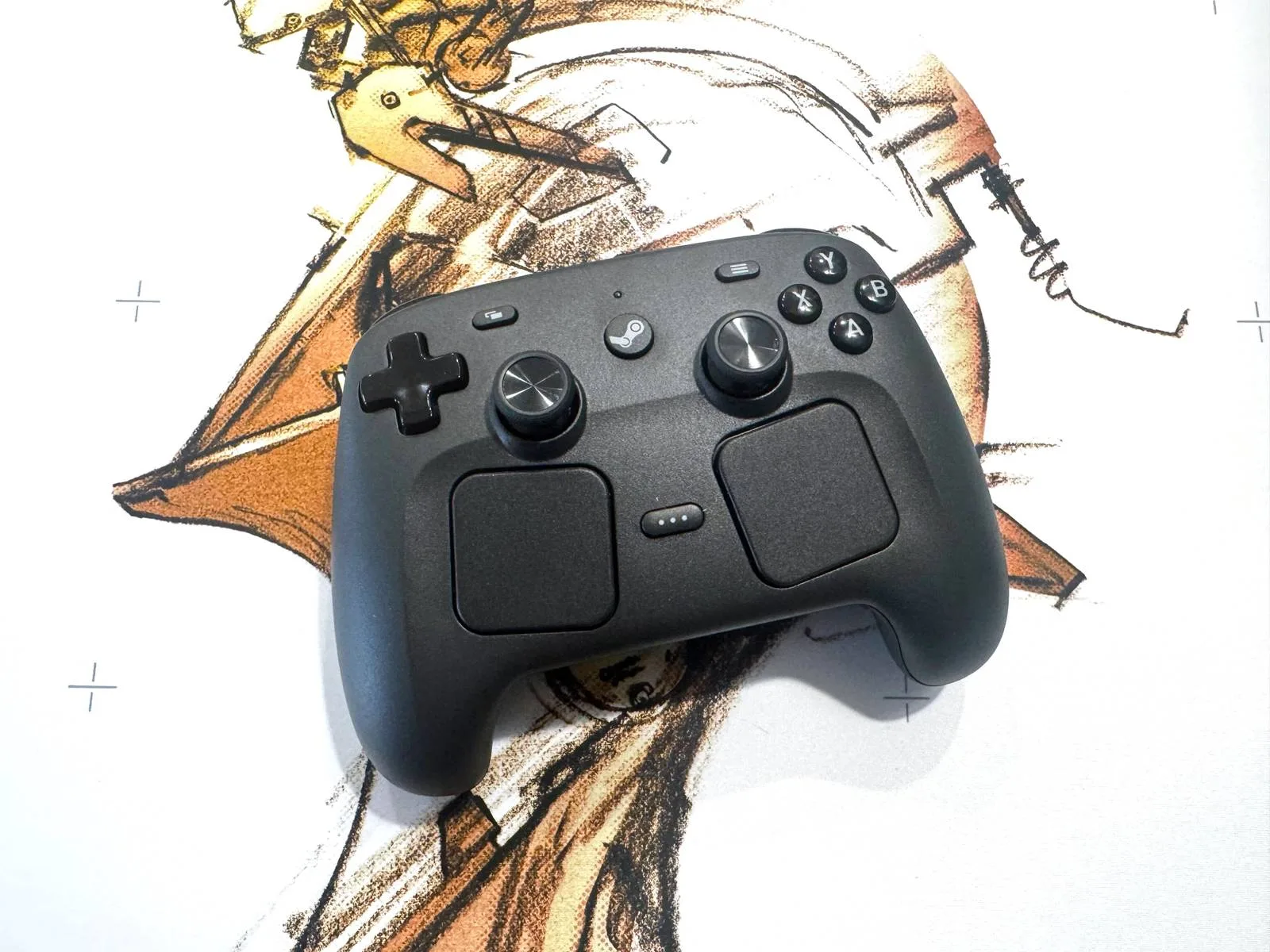
At $99 / €99 / £85, the Steam Controller sits in the mid-range. It's almost twice the price of an 8BitDo Ultimate 2 ($50) or a DualSense ($60), but cheaper than pro controllers like the Razer Wolverine V3 Pro ($199.99) or Xbox Elite Series 2 ($179.99). Is the price justified? For Steam-focused gamers, yes. For casual use, it's overpriced.
Build quality is a mixed bag. The membrane face buttons feel mushy compared to mechanical switches, and the D-pad is stiff—not ideal for fighting games. On my review unit, I noticed a squeaky trigger and a slightly misaligned shell. The back buttons, while welcome, are positioned too low for my ring fingers to reach comfortably. I rated value a 3 out of 5.
But there's a silver lining: repairability. Valve designed this controller for easy disassembly using Torx bits and a spudger. They plan to offer official spare parts via iFixit after launch. That's a rare commitment to longevity in an era of disposable electronics.
How It Stacks Up Against the Competition
The budget alternatives—8BitDo Ultimate 2 and DualSense—offer similar specs but lack Steam integration. The pro controllers (Razer, Xbox Elite) cost more and offer premium build, but they don't match the Steam Controller's gyro and trackpad synergy. The Steam Deck shares the same design philosophy but is optimized for handheld use, not couch/desk gaming.
The unique selling point is clear: unmatched Steam integration. Multiple outlets agree. Polygon says, "I can't imagine playing my PC games with anything else." IGN calls it "my favorite controller for PC gaming." TechRadar praises its "more conventional and user-friendly design." PCMag declares it "fundamentally better in every way." The consensus is loud: this is the best PC controller for Steam enthusiasts.
The Verdict
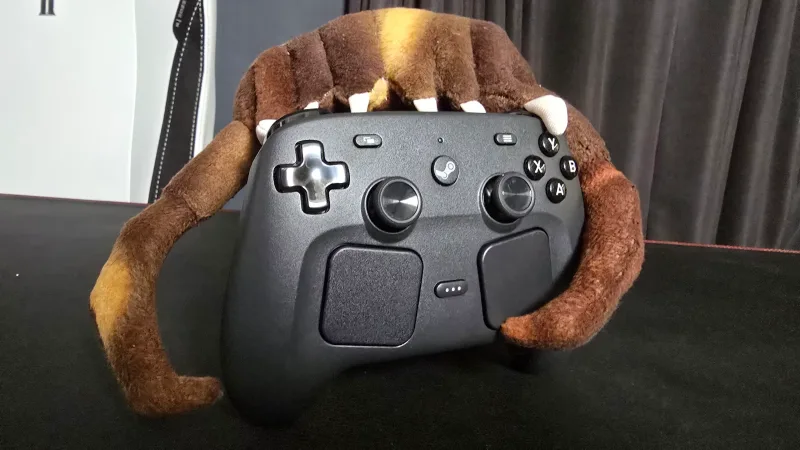
The Valve Steam Controller (2026) isn't perfect. Its software dependency, membrane buttons, and stiff D-pad hold it back. The lack of an audio jack is frustrating. But for a 30-year PC gamer who values comfort, precision, and the depth of the Steam ecosystem, it's become my go-to for lazy couch gaming. The TMR thumbsticks, magnetic Puck charging, and 35-hour battery make it a revelation for its intended audience.
Buy this if: You live in Steam's ecosystem and value comfort, battery life, and customization. You play from a couch or bed and want a controller that feels like a natural extension of your PC.
Skip this if: You play across multiple launchers (Epic, Ubisoft, Xbox), need an audio jack, prefer mechanical face buttons, or want a controller that works with consoles. The flaws are real, but for my couch gaming sessions, I'm not looking back. Sega may have left the hardware game, but Valve has stepped in—and for Steam enthusiasts, that's a welcome arrival.

Comments
Join the Conversation
Share your thoughts, ask questions, and connect with other community members.
No comments yet
Be the first to share your thoughts!