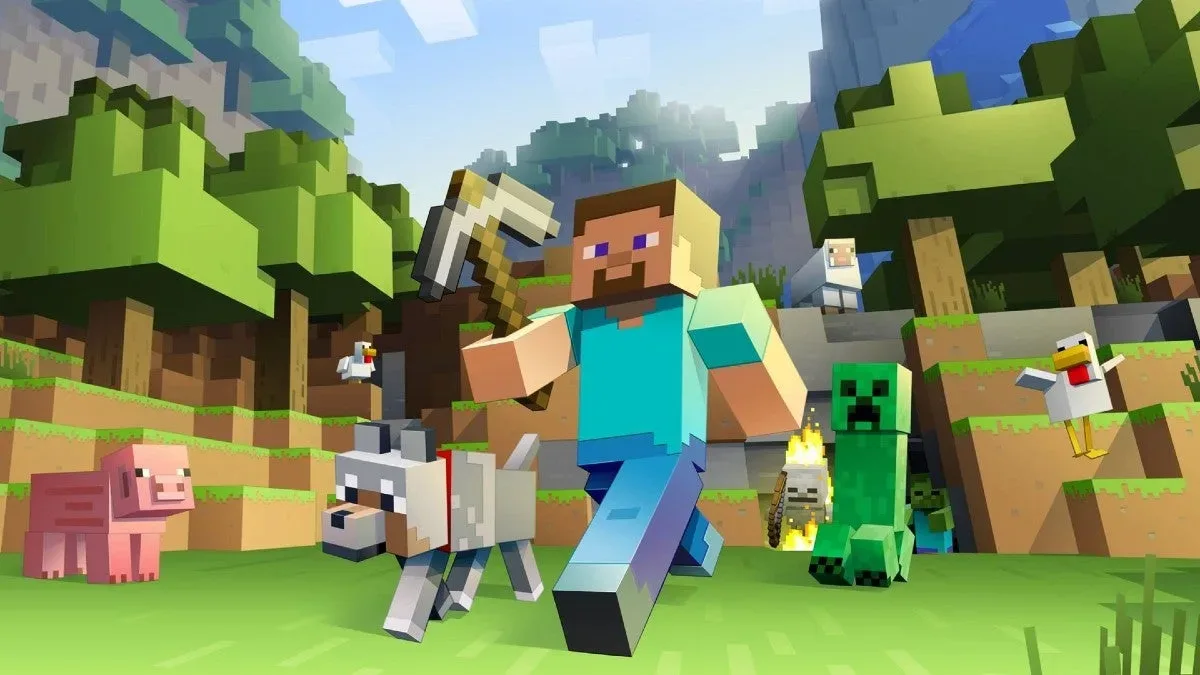
The video game industry’s most powerful lobbying group stood before a California Senate committee and declared that running a private Minecraft server is “illegal” and amounts to “piracy.” That bombshell came during a hearing on the Protect Our Games Act (AB 1921), a bill designed to force publishers to keep online games playable after official support ends. But there is one glaring problem: Minecraft’s own End User License Agreement explicitly permits server hosting, and the game’s official website encourages it. This article unpacks the ESA’s stunning statement, the legal contradictions, and what it all means for the future of game preservation.
The Hearing, What the ESA Actually Said
On a recent afternoon in Sacramento, Jennifer Gibbons, Vice President of the Entertainment Software Association (ESA), told state senators that private servers for Minecraft and Call of Duty are “illegal” and constitute “piracy.” She went further, equating these community-run servers to a “black market” for video games. When pressed by Assemblyman Chris Ward, Gibbons confirmed that the ESA currently has two pending lawsuits against private server operators and cited the U.S. Trade Representative’s (USTR) Notorious Markets Report to support her claim.
Assemblyman Ward pushed back, noting that both Minecraft and Call of Duty already rely on community servers as an existing solution for keeping games playable after official support ends. The exchange was tense, and the stakes were high. The Protect Our Games Act (AB 1921) had already passed the State Assembly with a bipartisan 43-16 vote. But in the Senate committee, the bill failed 4-3-4 (four ayes, three noes, four abstentions), short of the majority needed to advance. However, it was granted reconsideration, meaning the fight is not over.
The hearing video, which has circulated widely online, provides direct verification of Gibbons’ statements. The ESA’s position was clear: private servers are a threat.
The Contradiction, Minecraft’s EULA Says the Exact Opposite
Here is the problem with the ESA’s argument: Minecraft’s End User License Agreement (EULA) explicitly states the opposite. From the official document: “For the server version of Minecraft: Java Edition, you can install it on a server and host online play.” That is not a loophole or an oversight. It is the core of how Minecraft has operated for over a decade.
Minecraft’s official website goes even further, providing tools and guides for players to set up their own servers. It even maintains a list of “verified” community servers. This is not a gray area; it is a deliberate design choice by Mojang, which is owned by Microsoft, a member of the ESA. The very organization that pays dues to the ESA is actively encouraging what the ESA labeled illegal piracy.
After the hearing, the ESA issued a refined statement narrowing its claim to servers that “host or distribute copyrighted game content without authorization.” That is an implicit admission that authorized servers, like Minecraft’s, are not illegal. But the damage was already done. The initial broadside painted all community servers as illegitimate, a characterization that directly contradicts the licensing terms of the ESA’s own member company.
The Fight for Game Preservation, and the ESA’s Role
The Stop Killing Games movement, founded in 2024 by YouTuber Ross Scott after Ubisoft shut down The Crew, seeks legislation requiring publishers to leave online games in a playable state after support ends. Private and community servers are the primary mechanism for preserving games after publishers abandon them. By labeling those servers illegal, the ESA is essentially calling preservation itself a crime.
Stop Killing Games founder Ross Scott called the ESA’s statement “deliberately misleading” in a follow-up video, noting that “they’re counting on legislators not reading the actual licenses.” A volunteer from the group summed up the hearing similarly: the ESA’s claims were “designed to scare a busy legislator who does not have time to fact-check a well-dressed lobbyist in real time.” That observation rings true, especially given the ESA’s track record. The group raised approximately $36.6 million in revenue in fiscal year 2025 (ending March 2025), with $27.8 million coming from member dues. It spent $2.27 million on lobbying in that same period. Previous efforts have included lobbying against banning loot boxes and pay-to-win microtransactions in games played by minors, as well as opposing video game preservation initiatives.
The ESA represents major publishers including Microsoft, Sony, Nintendo, EA, and Ubisoft, the very companies that benefit from shutting down old games and restricting player-run servers. The Call of Duty comparison is particularly instructive: earlier titles in the franchise allowed some private server hosting (e.g., dedicated servers on PC), but Activision later restricted those capabilities. Today, tools like Plutonium exist to keep older CoD titles alive, but they operate in a far murkier legal space than Minecraft’s openly sanctioned servers. The ESA’s lumping of both games together obscures that crucial distinction.
When a game’s official servers go dark, the publisher loses ongoing costs but also severs the player community, making it harder for players to revisit older titles. Private servers threaten that control by preserving games long after publishers have moved on. The ESA’s reliance on the USTR Notorious Markets Report is particularly telling. That report specifically targets servers that bypass subscription fees, such as World of Warcraft private servers that charge money. It does not target general community servers like those for Minecraft. The ESA conveniently omitted that context.
The Protect Our Games Act (AB 1921) was the Stop Killing Games movement’s first major legislative effort in the United States. It passed the Assembly with bipartisan support before stalling in the Senate committee. But the vote was close, and reconsideration keeps the bill alive. Stop Killing Games has already announced plans to introduce similar bills in other states and potentially at the federal level. Separately, the European Commission recently rejected a 1.3 million-signature petition on the same issue, opting instead for a code of conduct, but the momentum is building.
The absurdity of the ESA’s position cannot be overstated. The industry’s top lobbyist labeled community servers, the very lifeline that keeps classic multiplayer games alive, as illegal piracy, while the most popular game in the world officially blesses them. The ESA’s later walk-back reveals the weakness of its legal position, but the damage to public trust is done.

What Comes Next
This hearing was a wake-up call. When a well-funded lobby can casually misrepresent the law to kill consumer protections, players must pay attention and hold both publishers and lawmakers accountable. The Protect Our Games Act may have narrowly failed for now, but the movement is only gaining momentum. The contradiction between the ESA’s claims and Minecraft’s own rules is a perfect illustration of why these protections are needed. The industry cannot have it both ways, either community servers are legitimate, or the ESA is asking its own members to rewrite their licenses. The players are watching, and in the next legislative session, they’ll be ready with receipts.





Comments
Join the Conversation
Share your thoughts, ask questions, and connect with other community members.
No comments yet
Be the first to share your thoughts!