
Imagine this: you're on a train, or in a waiting room, or just lounging on your couch. Instead of scrolling through social media or playing a mobile gacha game, you pull out your phone, tap an icon, and boot directly into your 200-hour Baldur's Gate 3 save. Not via a laggy cloud stream, but running natively on the device in your hand. This isn't a fantasy fueled by hype—it's the quiet, multi-year engineering project Valve is funding. While a "Steam Phone" isn't hitting shelves next year, the company is strategically laying the technological groundwork to decouple the world's largest PC gaming library from the x86 architecture, aiming directly at the ARM-powered future in our pockets.
This vision promises something cloud streaming can't: true ownership. It's about playing your modded Skyrim or your DRM-free GOG install, offline, with the instant response of local hardware. Valve isn't betting on a single piece of hardware; it's building an open-source bridge. If successful, it could transform not just phones, but tablets, handhelds, and beyond into genuine Steam gaming machines.
Valve's Long Game: Building the Foundation for ARM Gaming
To understand Valve's move, you must first dismiss the idea of a quick, market-grabbing product. This isn't a reaction to the Asus ROG Ally or the Legion Go. According to sources close to the project, this is a funded, long-term infrastructure initiative with the scale and patience of an engineering moonshot.
The core objective is elegantly simple yet technically daunting: enable the vast library of Windows games, built for x86 processors, to run locally on ARM devices. This focus on local execution is the critical, defining challenge. It consciously avoids the simpler but flawed path of cloud streaming—with its subscription models, internet dependency, and input lag—in favor of preserving the fundamental pillars of the Steam ecosystem that players cherish: permanent ownership, the ability to play offline, full support for mods and community patches, and the imperceptible latency of local input. It also relieves developers from the monumental task of creating separate ARM ports for thousands of legacy and current titles.
Valve is playing for the endgame: ensuring the Steam platform's relevance and library remain accessible regardless of the underlying silicon that powers future consumer devices.
The Open-Source Tech Stack: FEX and Proton
The magic—or rather, the brutally complex software engineering—happens through two key open-source projects Valve is actively nurturing.
First is FEX (Fast Emulation of X86). This is the critical, low-level translation layer that allows instructions written for Intel and AMD chips to be understood by ARM processors. Valve's commitment here is serious; they have been funding FEX development since 2016, with core developers working on it full-time. FEX handles the heavy lifting of CPU emulation, translating x86 code into ARM instructions on the fly.
This is where the second piece, Proton, comes in. Gamers know Proton as the wizardry that lets Windows games run on the Linux-based Steam Deck. Proton is a compatibility layer that translates Windows system calls (API calls) into Linux ones. For the ARM future, the plan is for these technologies to work in tandem: FEX would translate the game's x86 CPU instructions for the ARM chip, while Proton would handle the Windows-to-Linux (and potentially, in this context, to a mobile OS) translation for the rest of the software stack.
Think of it as a two-stage relay. The game's code passes through Proton, which handles its "conversation" with the operating system, and through FEX, which rewrites its core "language" for the ARM CPU. It's a software solution to a hardware divide.
The Hardware Potential: Efficiency and New Form Factors
Why go through all this trouble for ARM? The answer lies in efficiency and diversity. ARM chips, like those from Qualcomm, MediaTek, and Apple, are designed for power-constrained environments. This inherent efficiency could translate into gaming devices with better battery life, less heat generation, and potentially fanless designs—all at a lower cost than current x86 handhelds. For the user, this could mean a handheld that lasts through a cross-country flight on a single charge, or a sleek tablet that runs Elden Ring without becoming a lap-scorching hotplate.
This technological bridge opens the door to a diverse hardware ecosystem. Imagine a future with dedicated gaming handhelds from various manufacturers using top-tier Qualcomm Snapdragon Elite Gaming chips, MediaTek's Dimensity series, or even custom gaming-focused ARM SoCs (Systems on a Chip). It enables form factors beyond the clamshell, like powerful gaming tablets or compact devices.
The proof of concept is already here. Recent demonstrations have shown Qualcomm's Snapdragon X Elite chip running demanding titles like Cyberpunk 2077 and Black Myth: Wukong at impressive performance levels. This isn't emulation via FEX yet, but it showcases the raw graphical potential of modern ARM hardware. Once the software translation layer is mature, this performance can be applied to the entire Steam back catalog.
The Roadmap and Hurdles: From Vision to Reality
Before you start saving for a Valve-branded phone, temper those expectations. No "Steam Phone" is imminent. SteamOS architect Pierre-Loup Griffais has stated that while technically possible, developing a phone-specific SteamOS is "not a current focus" for Valve. The company is not currently developing its own ARM handheld or phone hardware.
So, how will we see progress? It will be incremental, appearing first in updates to Proton and the broader SteamOS/Steam Runtime. Gamers might first experience this on a future iteration of the Steam Deck or on third-party ARM handhelds that choose to run a version of SteamOS.
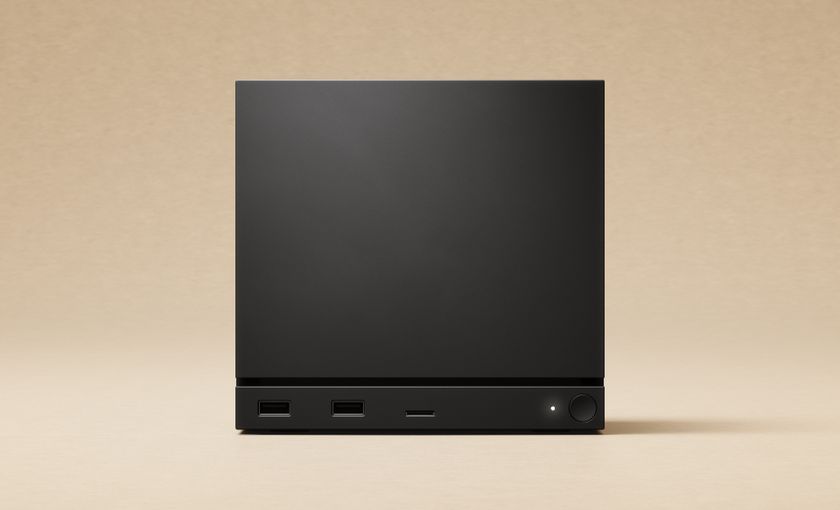
The announced Steam Frame VR headset offers a fascinating glimpse into this cross-device vision. Powered by a Snapdragon 8 Gen 3 ARM chip, Valve has confirmed it will support playing non-VR Steam games in a virtual desktop environment. This is a direct, tangible step toward the ARM gaming future.
However, a monumental hurdle stands in the way of your phone becoming a Steam machine: the walled gardens of Apple's iOS and, to a lesser extent, Google's Android. These platforms are controlled by their manufacturers, who dictate software distribution through their own stores. For Steam to be easily installed and run games seamlessly, it would require significant policy changes from Google and, especially, Apple to allow alternative storefronts and low-level hardware access without cumbersome sideloading workarounds. Navigating this political and commercial landscape may be as big a challenge as the technical one.
Valve's patient investment in FEX and Proton is a bet on an open, hardware-agnostic future for PC gaming. They are building the roads before deciding what cars to drive on them. The goal remains: to one day let you boot your entire Steam library on the device in your pocket, with all the ownership and responsiveness that defines PC gaming.



Comments
Join the Conversation
Share your thoughts, ask questions, and connect with other community members.
No comments yet
Be the first to share your thoughts!