
You've amassed a collection of rare ores, unique trinkets, and quest items in Crimson Desert, only to hit a wall—there's no stash to put them in. This moment of inventory panic is a universal rite of passage in Pywel. Unlike many modern RPGs, Pearl Abyss's ambitious title launched with a deliberate and notable omission: a traditional storage system. No personal chests, bank vaults, or functional cabinets exist. This guide cuts through the frustration, confirming the current reality, detailing the essential strategies to manage your hoard today, and outlining the developer-promised solutions for tomorrow.
The Storage Reality at Launch
Let's state it plainly: at launch, Crimson Desert has no functional player storage system. The environmental dressing is there—you'll see cabinets in houses and chests in the world—but interacting with them yields no storage interface. You cannot store items on your horse (except for a specific category of trade goods, which we'll cover later), and your camp offers no personal locker.
This design stems from a core philosophical choice. The game has abolished the traditional carry weight or encumbrance system. Instead, it employs a slot-based inventory with a seemingly generous starting point. While early player reports varied, the confirmed baseline is 50 inventory slots from the moment you begin your journey. The intended loop is one of slot management within a limitless carrying capacity, pushing players to make constant decisions about what to keep, sell, or discard as they explore. It's a system that prioritizes mobility and immediate decision-making over the comfort of a secure hoard, for better or worse.
How to Expand Your Carrying Capacity
With no vault to dump your loot, your primary survival strategy is to aggressively expand the inventory you carry with you. Thankfully, the game provides clear, if sometimes grindy, paths to do so.
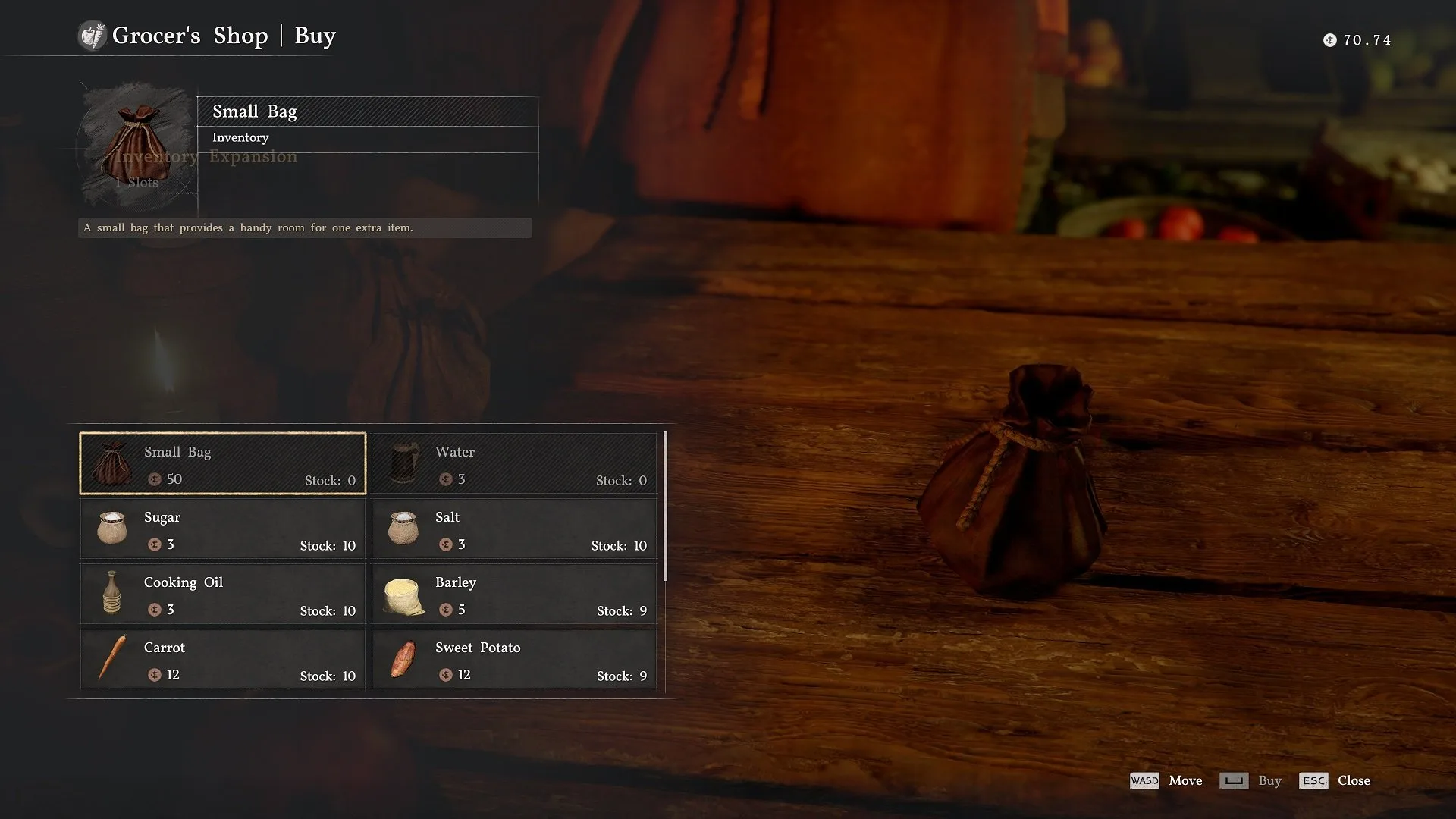
The most straightforward method is purchasing bag upgrades from town vendors. In settlements like Hernand, general goods merchants sell Small Bags. These consumable items permanently add a modest number of slots—typically between 1 and 3—to your total capacity. It's a simple gold-for-space transaction and should be your first port of call when you feel the squeeze.
The more rewarding path involves questing. Specific side quests and, importantly, vendor commissions offer Medium Bags and direct slot increases as rewards. These provide a more significant expansion to your carrying potential. Practical advice? Prioritize completing vendor commission boards in major towns. Not only do they often reward inventory upgrades, but they also funnel you into activities that yield the gold needed to buy the smaller bag upgrades, creating a positive feedback loop for your storage woes.

Clever Workarounds and Temporary "Storage"
In the absence of true storage, the community has identified a few clever, if imperfect, workarounds to act as a temporary safety net.
First is the Supply Chest at Howling Hill. This unique object automatically collects certain missed event items, such as loot you didn't grab from a completed World Event. You can retrieve these items from it, but its critical limitation is that you cannot manually place anything inside. It's a one-way retrieval system, not a player-controlled stash.
The most widely used—and riskiest—method is the Vendor Repurchase Tactic. This involves selling a non-essential item you wish to "store" to a town vendor, with the plan to buy it back later from their "Repurchase" tab. The downsides are significant: you incur a financial loss (selling at vendor price and repurchasing at a marked-up cost), and your items are on a timer. Community testing suggests repurchased items persist for between 2 to 7 in-game days before potentially vanishing from the vendor's list. Use this only for short-term holds of items you absolutely cannot bear to lose or re-acquire.
Finally, your mount offers a sliver of utility. Your horse can carry Trade Packs (a specific type of trade good) before you unlock the wagon system. For general crafting materials, weapons, or armor, however, the saddlebags might as well not exist.
Developer Roadmap and Community Feedback
The lack of storage has been, unsurprisingly, a major point of criticism and discussion within the Crimson Desert community. Players have been vocal about the need for a dedicated system to manage the fruits of their labor and collection pursuits.
In response, Pearl Abyss has officially confirmed that a proper, dedicated item storage feature is planned for a post-launch game patch. This acknowledgment directly addresses player feedback and promises a fundamental quality-of-life improvement. It is worth noting that this feature was not included in the Day 1 update, cementing its status as a priority addition rather than a launch-ready component. The community's reaction, while frustrated, has been met with this clear developer intention to evolve the game based on player experience.
The current inventory system in Crimson Desert is a unique, challenging layer of its early experience. Your strategy must focus on proactive expansion: hunt down bag upgrades from vendors and quests as your primary objective. Employ the vendor repurchase tactic sparingly, only for critical short-term safekeeping, and always be aware of the gold cost and ticking clock. For now, your journey is defined by what you can carry on your back—a design that makes every item slot a meaningful choice. Mastering this constraint will make you a more discerning adventurer, ready to fully utilize the proper storage system when Pearl Abyss delivers this highly anticipated update.





Comments
Join the Conversation
Share your thoughts, ask questions, and connect with other community members.
No comments yet
Be the first to share your thoughts!