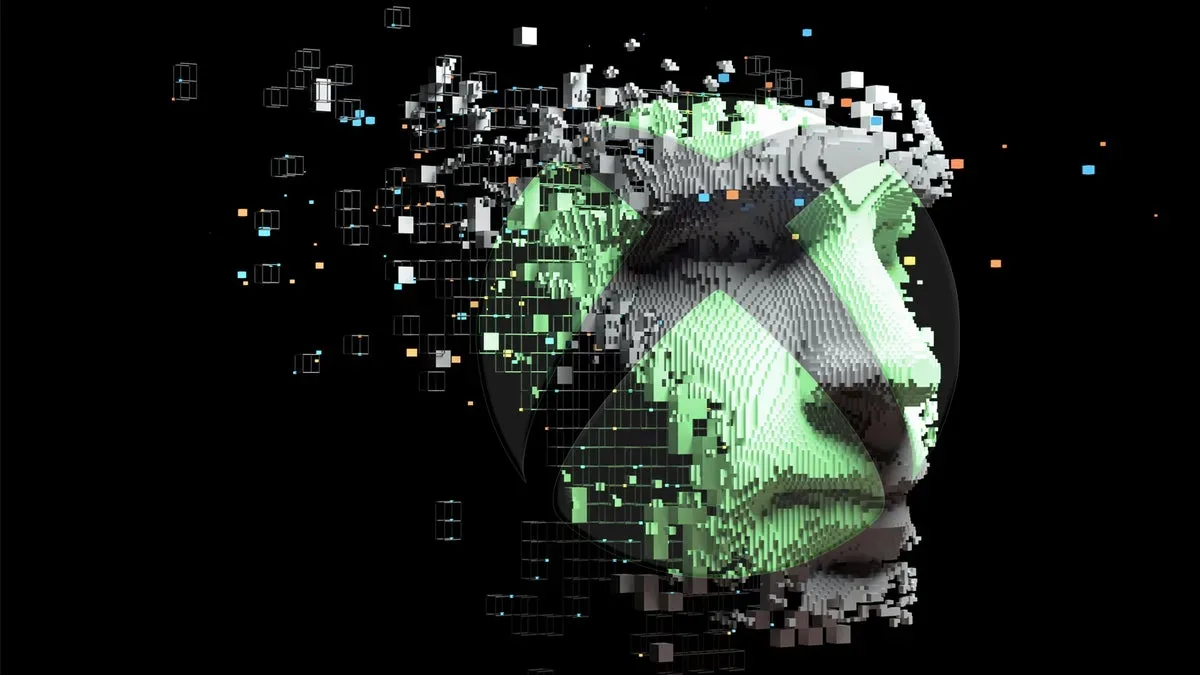
Imagine being utterly stumped by a brutal boss, your progress halted for hours. Instead of scouring forums for a text guide or watching a YouTube tutorial, you simply issue a command. Instantly, an expert player—or perhaps an artificial intelligence—takes the reins of your game, executes the perfect dodge-roll combo, and defeats the foe, handing control back to you. This isn't a speculative feature from a distant cyberpunk title; it's the concrete future being blueprinted in patent offices by the industry's titans. Hot on the heels of a similar filing from Sony, Microsoft has secured a groundbreaking patent for a cloud-based AI game helper system for Xbox. This move signals a seismic shift from passive assistance to active intervention, forcing us to confront profound questions about challenge, accomplishment, and the very nature of playing a game. We're diving into Microsoft's "state management for video game help sessions," placing it in the context of an industry-wide AI arms race, and analyzing what it means for the future of gaming.
Inside Microsoft's "State Management" Patent
At its core, Microsoft's 2024 patent, "state management for video game help sessions," outlines a system designed to obliterate the concept of being permanently "stuck." The proposed function is both simple and revolutionary: it allows a player to temporarily transfer control of their live game session to an external "helper" to overcome a specific challenge.
A critical detail within the patent is the dual nature of this helper. The assisting entity can be another human player or a machine learning model (AI). This flexibility suggests a future where you could call upon a skilled friend or summon a hyper-competent AI agent with equal ease. The patent further details the proposed AI's capabilities, describing a "generative model" that could use image recognition to analyze your screen and produce outputs like text hints, illustrative images, or even code-based assistance to modify a game state.
Perhaps the most crucial feature is the layer of player control and safety baked into the design. The system isn't about forced progression. After a help session concludes, the player is presented with a choice: accept the new game state (e.g., your character now stands victorious over the defeated boss) or reject it and return to the exact save point from before the intervention. This "undo" function is vital, preserving player autonomy and ensuring the help is a tool, not a mandate.
The Gaming Industry's AI Arms Race
Microsoft's filing is far from an isolated experiment; it's a strategic move in a rapidly escalating competitive landscape. Sony paved the way with its own patent for an AI 'ghost' assistant on PlayStation, establishing a clear industry trend. Furthermore, Microsoft is already testing these waters in the real world with the beta "Xbox Gaming Copilot," an AI-driven sidekick designed to offer real-time, contextual advice without taking direct control.
These new "takeover" systems represent a quantum leap beyond traditional assistance. They move past static strategy guides, asynchronous video walkthroughs, or simple in-game hint systems. This is direct, on-demand problem-solving executed within your unique game instance. The patent also hints at a social or economic layer: a proposed "helper rating" system. Here, players—human or AI—could be rated on overall skill or specific proficiency in genres or individual games, potentially creating a marketplace of elite assistants for hire.
This push is part of the explosive growth in AI innovation. Annual AI patent applications in the U.S. more than doubled from roughly 30,000 in 2002 to over 60,000 by 2018. The gaming-specific patents from Microsoft and Sony draw directly from major, booming AI categories like Computer Vision (for an AI to "see" and recognize in-game objects) and Reinforcement Learning (the key to training AI on optimal gameplay through trial and error). While giants like OpenAI and Google drive the broader field, the gaming sector is now fully engaged in its own high-stakes patent race.

Implications and Ethical Questions for Gamers
The potential of these systems is immense, but it forces a reckoning with foundational gaming principles. Firstly, it could completely redefine "getting stuck." What was once a hard barrier requiring practice, research, or community help becomes a momentary pause before an AI provides the solution. This raises the classic debate about the value of struggle. Does bypassing a challenge via AI assistance undermine the hard-won sense of accomplishment that defines so many gaming triumphs?
This debate leads directly to potential consequences for game design. If developers know players have access to an 'AI easy button,' might they design more obtuse or punishing challenges, creating a de facto pressure to use the helper? Conversely, could this technology liberate designers, allowing for more creative, experimental, and niche game mechanics, secure in the knowledge that players won't hit an insurmountable wall? The relationship between challenge design and assistance tools is poised for a fundamental renegotiation.
Significant questions also surround data, privacy, and control. Training effective AI helpers requires massive datasets of gameplay footage, player decisions, and success/failure states. Who owns this data? How is it secured? Furthermore, while the patents emphasize player choice, there's a risk that games could be designed with an expectation of AI assistance, subtly pressuring players to use it.
Looking ahead, the applications could extend far beyond boss fights. We might see AI helpers that complete tedious grinding tasks, learn a player's unique style to co-pilot games adaptively, or even act as dynamic, personalized trainers. The line between player and assistant could become beautifully—or disconcertingly—blurred.
The patents from Microsoft and Sony signal a fundamental pivot from watching a solution to outsourcing its execution. The promise of a frictionless, unfrustrating gaming experience is undeniably compelling, especially for time-poor players. Yet, it challenges us to examine what we value in the interactive medium: is it the curated experience, the story, and the spectacle, or is the core satisfaction inextricably linked to personal mastery over challenge? As AI patent activity surges globally, these gaming applications are a frontline in a broader revolution. Whether these systems remain optional aids or begin to redefine game design philosophy itself will fundamentally shape the games we play and how we define victory within them for the next console generation.
Tags: AI in Gaming, Microsoft Xbox, Sony PlayStation, Video Game Patents, Future of Gaming


Comments
Join the Conversation
Share your thoughts, ask questions, and connect with other community members.
No comments yet
Be the first to share your thoughts!